
Investors are sceptical that the economy could have picked up so much steam.
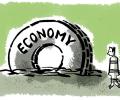
'Once the lockdown is lifted, we will see some pickup in demand.' 'And my sense is that it will be a long walk this time given that we have lost three months of economic activity.'

Record liquidity infusion by the central bank in the banking system during the financial year 2020-21 amid sluggish economic activity resulted in banks investing more in safe government papers than in extending loans, data from Reserve Bank of India (RBI) showed. This trend has not been seen in nearly two decades, barring 2016 - the year of demonetisation.
The Cabinet Committee on Economic Affairs (CCEA) on Wednesday approved a five-year-long reform-based result-linked power distribution scheme worth Rs 3.03 lakh crore, for strengthening system of utilities to improve efficiency. Briefing after the CCEA meet here, Power and New & Renewable Energy Minister R K Singh said, "We have done a lot for power distribution reforms. It needs to be strengthened. Today, the Cabinet has approved the new scheme worth Rs 3.03 lakh crore, including Rs 97,000 crore central outlay." He said the funds would be given to power distribution companies (discoms) to strengthen their system.

'If an election promise has to be credible, silence on practical questions doesn't help matters,' notes T N Ninan.
'Obviously, MSP hike raises chances of a reduction in exports. Even without an MSP hike, India's exports of a number of agri-commodities, like sugar, were unviable in the overseas markets.'

The global COVID-19 situation, rollout of vaccines, geopolitical trends, Union Budget and economic recovery would be the major factors driving investor sentiments in 2021 after a tumultuous year which saw both 'the worst of times and the best of times' for the stock market, said analysts. What a year 2020 turned out to be! From witnessing gigantic losses to record-shattering gains, investors went on a roller-coaster ride amid the coronavirus pandemic and massive stimulus measures. Markets closed 2020 with remarkable gains of around 16 per cent, but will the winning ways continue in 2021 as well?

In India, economic activity slowed substantially in 2019, with the deceleration most pronounced in the manufacturing and agriculture sectors, whereas government-related services sub-sectors received significant support from public spending, the Bank said.

Fitch Ratings on Wednesday said India's high fiscal deficit would pose a challenge in lowering the debt to GDP ratio, which is expected to rise above 90 per cent in the next five years. It said India entered the pandemic with little fiscal headroom from a rating perspective. Its general government debt/GDP ratio stood at 72 per cent in 2019, against a median of 42 per cent for 'BBB' rated peers.

Critics said a 10-plus per cent annual increase in incomes is a tall order, given that between 2002-03 and 2012-13, farm incomes grew yearly by 3.6 per cent.

While the positive surprise has been the high growth in agriculture, the negative surprise is in the trade, transport, hotels segment where growth came lower than expected, says Madan Sabnavis.

The McKinsey report said faster employment growth at 12 million non-farm jobs annually is needed in the post-Covid period till 2029-30, up from just four million created each year between 2012 and 2018.

While the mango season started with the Alphonso variety trading at Rs 18 a kg (model price), it jumped to Rs 30 a kg at the wholesale Vashi mandi.

'The current economic contraction is certainly due to the lockdowns as a response to the pandemic, which is an act of God.' 'Nobody has seen such a thing in the last 100 years.' 'Saying that this was an act of mismanagement is largely incorrect'

Environment Minister Prakash Javadekar will sign the agreement on behalf of India.

With India's GDP clocking a lower contraction of 7.5 per cent in the September quarter, industry and experts expressed confidence of further recovery in the coming months and said the government's actions are bearing fruit. In a tweet, Vedanta chairman Anil Agarwal said, "Q2 #GDP numbers show that economy is recovering. Government's efforts on stimulus and reform are showing results. Hopefully, we will have positive growth in H2 FY21 and double digit growth in FY22."

Most brokerages have maintained their Sensex and Nifty targets as they believe there is little room for further re-rating in the backdrop of weak earnings.

While the government has claimed significant increase in funds for farm credit, PMKSY and PKVY, facts show a different story.

Modi is also scheduled to hold a bilateral meeting with Xi on Tuesday.

The report said South Asia is expected to be the fastest-growing region.

A monsoon deficit is likely to affect the agriculture output, which could have an impact on the food inflation

India plans to keep its fiscal deficit within 3.9% of GDP.

The Survey noted that while women account for almost half of India's population, their participation in labour market is almost one-third and has been declining.

The praise comes a year after Prime Minister Narendra Modi termed it a 'monument of UPA's failures'.

'The Budget has maintained fiscal prudence while announcing a number of steps to boost growth, particularly in infrastructure and rural sectors.'
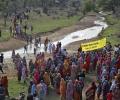
Businesses that either take local communities for granted or see them as an obstacle to be 'managed' are skating on thin ice.

Aayog feels expansion of the lowest base will enable more people to pay taxes.

Boost to dairy sector will generate jobs

While most experts suggest the government loosen its purse strings and not worry about the fiscal deficit in a pandemic impacted year, it will be a tightrope walk for the government to increase spending without going overboard.
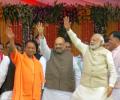
The BJP's manifesto for UP elections promised many things. But, given the state's precarious financial position, fulfilling these promises is likely to prove tricky, says Ishan Bakshi.

Officials said good rain in August - though it might not improve acreages much for most crops except urad, moong, and paddy - would help in improving yields in the crops already planted.

Indian farming was transformed after the mid-60s.
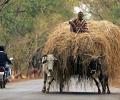
Rajan also said the outlook for agriculture is subdued, in view of both rabi and kharif prospects being hit by monsoon vagaries.
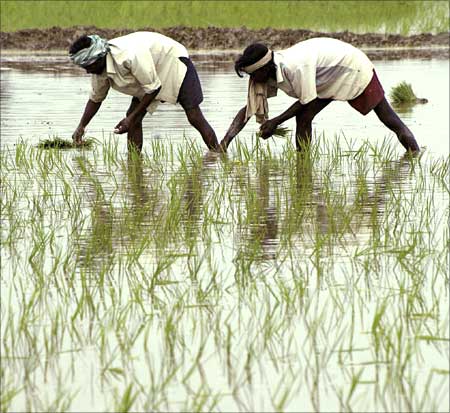
'It is quite natural for our farmers to go for rice and cane when both power and water are almost free.'

Single window clearances for realty must.

Industrialists affirm their belief that the adverse effects of demonetisation and the goods and services tax are finally over.

Economist S Janakarajan, in an interview to Shobha Warrier/Rediff.com warns that without proper infrastructure, India will never be able to build a market economy.
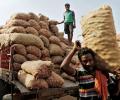
Analysts expect modest recovery in Indian economy.

This will be an area where bilateral or regional trade pacts may not be able to perform well.
